

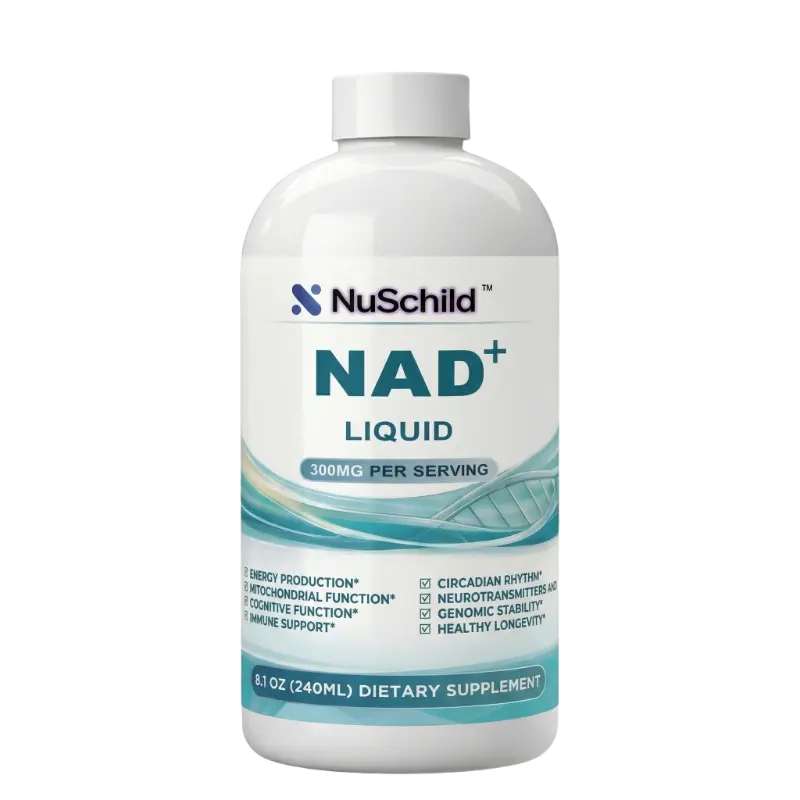
Energy Production
Nuschild’s 300mg liquid NAD+ boosts ATP via Krebs cycle for daily stamina and vitality.
Genomic Stability
Nuschild NAD+ aids DNA maintenance with PARPs for cellular integrity and stability.
Benefites
• Cellular Energy • Mitochondrial Support • Redox Balance • Immune Optimization • Circadian Regulation • Neurotransmitter Aid • Genomic Promotion • Oxidative Mitigation
Mitochondrial Function
Highly absorbable NuSchild formula supports mitochondrial efficiency for endurance and recovery.
Energy Production
Nuschild’s 300mg liquid NAD+ boosts ATP via Krebs cycle for daily stamina and vitality.
Genomic Stability
Nuschild NAD+ aids DNA maintenance with PARPs for cellular integrity and stability.
Benefites
• Cellular Energy • Mitochondrial Support • Redox Balance • Immune Optimization • Circadian Regulation • Neurotransmitter Aid • Genomic Promotion • Oxidative Mitigation
Mitochondrial Function
Highly absorbable NuSchild formula supports mitochondrial efficiency for endurance and recovery.
200
%
Metabolite Uplift in Tissue Metabolite Abundance
460
Days
Youthful Shift in Reduced Biological Age
50
%
Cytokine Reduction Inflammation
1.5
Fold
Walking Boost Improved Mobility
Aging and Longevity
Nicotinamide adenine dinucleotide functions as a critical coenzyme in cellular energy metabolism, DNA repair, and adaptive stress responses, with concentrations diminishing during the aging process. Precursors including nicotinamide riboside and nicotinamide mononucleotide elevate NAD+ levels in tissues, thereby enhancing mitochondrial efficiency, alleviating oxidative damage, and extending healthspan in preclinical investigations. Empirical data indicate advantages in prolonging lifespan, averting muscular degeneration, and strengthening resilience against age-associated pathologies.
Neurodegenerative Disorders
NAD+ governs neuronal bioenergetics, genomic integrity, and synaptic adaptability via sirtuins and poly(ADP-ribose) polymerases. In experimental models of Alzheimer’s and Parkinson’s diseases, supplementation protects neuronal structures, diminishes inflammatory processes, and sustains cognitive capabilities. Clinical investigations demonstrate that increased NAD+ concentrations align with reduced biomarkers of pathological progression, positioning it as a viable therapeutic objective for cerebral aging and neurodegenerative ailments.
Respiratory Conditions
NAD+ modulates airway inflammatory responses and mitochondrial operations in disorders like chronic obstructive pulmonary disease. Controlled trials reveal that nicotinamide riboside administration decreases inflammatory indicators in affected individuals, thereby improving pulmonary function. Scholarly inquiries underscore its safety profile and effectiveness in immune regulation, indicating potential utility in overseeing chronic respiratory ailments and bolstering lung durability.
Cardiovascular Health
NAD+ maintains vascular equilibrium by attenuating inflammation, promoting autophagic processes, and optimizing endothelial performance. In models of hypertension and atherosclerosis, NAD+ enhancement reduces arterial pressure and prevents metabolic syndrome development. Evidence from preclinical and clinical sources emphasizes its contribution to ameliorating age-related cardiovascular deterioration, thereby offering prospects for preventive strategies in heart disease management.
Metabolic Disorders
NAD+ regulates glucose and lipid metabolic pathways through AMPK and SIRT1 signaling mechanisms. In conditions such as diabetes and obesity, precursor compounds improve insulin responsiveness, decrease triglyceride and cholesterol concentrations, and facilitate mitochondrial biogenesis. Meta-analyses from human studies confirm the safety of NAD+ augmentation, promoting enhanced energy equilibrium and mitigated risk factors, with implications for therapeutic applications.
DNA Repair Mechanisms
NAD+ acts as a substrate for poly(ADP-ribose) polymerases in DNA damage detection and repair pathways. Depletion compromises genomic stability, exacerbating aging and degenerative conditions. Precursor supplementation reinstates NAD+ levels, activating repair enzymes and countering oxidative lesions. Research elucidates its pivotal function in preserving cellular integrity and averting mutations via improved epigenetic oversight.
Revive Your Cellular Energy and Youthful Essence
Discover Peak Vitality Through Science-Driven Wellness Breakthroughs
147
Studies
Reviewed
Comprehensive Research Base
Our commitment to scientific excellence is evidenced by a systematic review of 147 articles, encompassing 113 preclinical and 34 clinical studies on NAD+ metabolism and supplementation. This extensive analysis highlights NAD+’s role in mitigating age-related declines, enhancing mitochondrial function, and supporting metabolic health. By investing in rigorous evaluation of pathways like salvage and de novo synthesis, we ensure our NAD+ precursors deliver evidence-based benefits for longevity and disease prevention, underscoring our dedication to innovation and quality in cellular health solutions.
2.1
Times
Endothelial Function Boost
Vascular Wellness Promotion
Combined NR and related compounds have been linked to a 2.1-fold improvement in endothelial dilation metrics among older adults after consistent administration over 12 weeks. This support helps sustain circulatory efficiency, reduces minor vascular strain, and optimizes nutrient delivery, contributing to general cardiovascular harmony. Preclinical and human data underscore NAD+’s role in autophagy and oxidative metabolism in vascular cells. These processes may assist in upholding circulatory health as an element of preventive lifestyle practices.
60
Percentages
ROS Reduction
Mitochondrial Function
Administration of NAD+ precursors like NMN over extended periods has correlated with up to 60% decreases in reactive oxygen species (ROS) markers in cellular models. This modulation promotes mitochondrial integrity, alleviates oxidative burden, and fosters cellular adaptability, thereby enhancing overall endurance and well-being. Scholarly analyses highlight NAD+’s role in activating sirtuins for improved organelle biogenesis, which may underpin these benefits. Such mechanisms support routines aimed at sustaining energy equilibrium and reducing occasional cellular stress in healthy individuals.
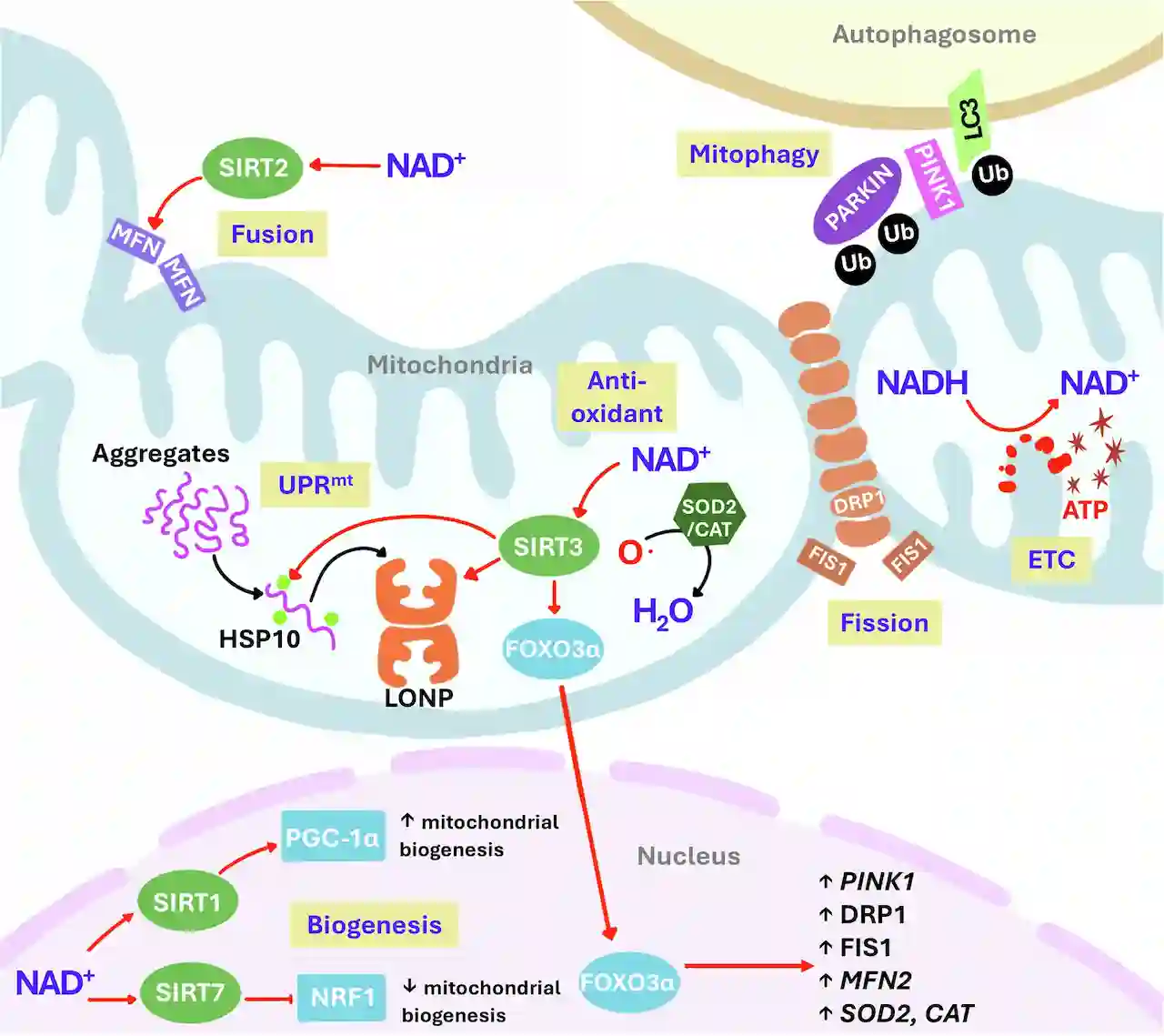
NAD+ contributes to mitochondrial homeostasis through integrated bioenergetic, quality control, redox, and biogenetic programs. In oxidative phosphorylation, NAD+ serves as a central redox cofactor that accepts electrons in dehydrogenase reactions and supplies reducing equivalents to the electron transport chain, thereby supporting electron flux and ATP production. Beyond its metabolic role, NAD+ availability functions as a regulatory node for mitochondrial maintenance, acting largely through sirtuin mediated deacylation activity and downstream transcriptional control.
Mitophagy provides selective removal of dysfunctional mitochondria through membrane associated sensors and receptor pathways that label damaged organelles for autophagic sequestration and lysosomal degradation. Within this framework, SIRT3 has been linked to activation of the PINK1 dependent mitophagy axis, in part by increasing PINK1 expression through FOXO3α. In parallel, the mitochondrial unfolded protein response coordinates chaperone assisted folding and protease mediated degradation to limit proteotoxic stress in the matrix. SIRT3 is reported to strengthen this proteostasis network by enhancing the functional activity of HSP10 and the LON protease.
Mitochondrial redox balance is maintained by antioxidant systems that constrain reactive oxygen species generation and accumulation. Key detoxifying enzymes, including superoxide dismutase and catalase, are transcriptionally regulated through the SIRT3 FOXO3α axis, thereby coupling NAD+ dependent signaling to oxidative stress control. Mitochondrial dynamics further sustain organelle integrity through fusion, which enables complementation and macromolecular exchange, and fission, which supports organelle segregation, replication, and the removal of damaged fragments via mitophagy. Mechanistically, SIRT3 promotes expression of fission associated factors such as FIS1 and DRP1 through FOXO3α, whereas SIRT2 has been associated with increased levels of the fusion mediator MFN2.
Mitochondrial biogenesis is orchestrated by the PGC 1α transcriptional coactivator network. NAD+ dependent activation of SIRT1 can stimulate PGC 1α driven transcriptional programs that promote mitochondrial DNA replication and increase mitochondrial protein expression. By contrast, SIRT7 has been reported to repress NRF1, thereby attenuating mitochondrial biogenesis.
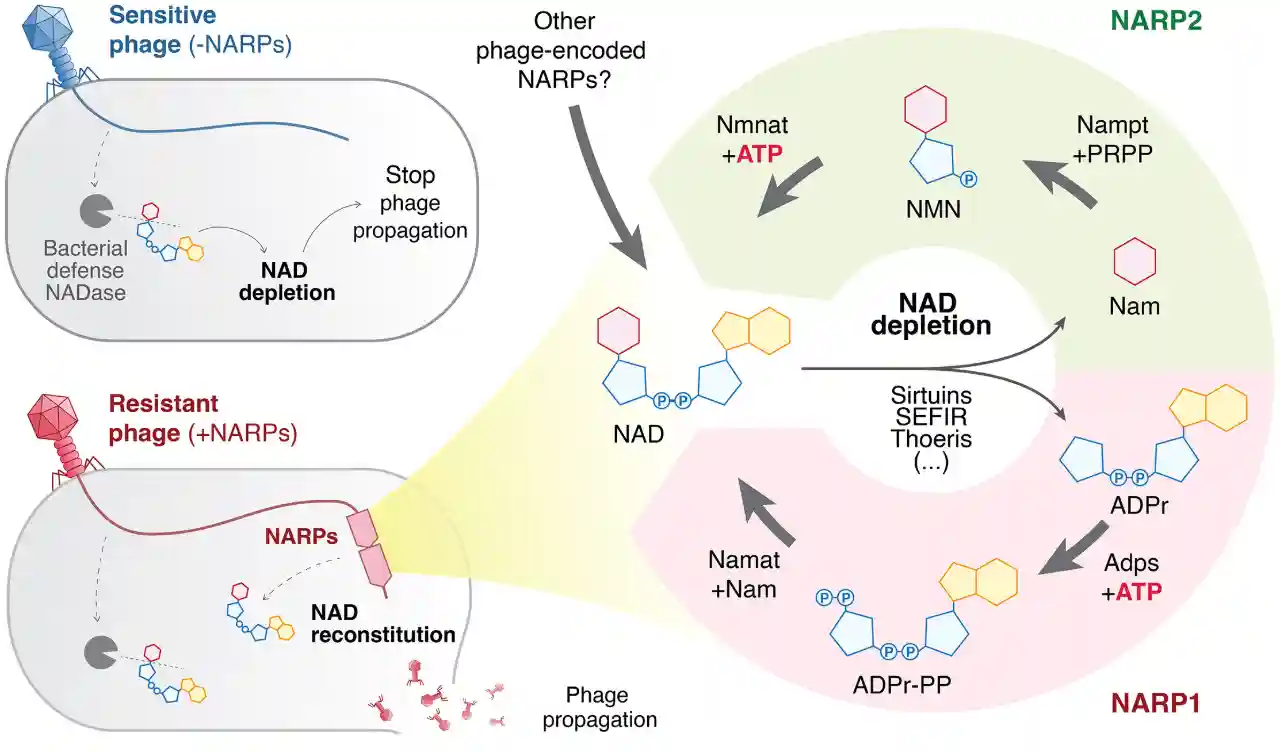
Phages are viruses that infect bacteria, and bacteria fight back using immune systems that can shut down key cellular resources. One important target is NAD+, a molecule required for energy production and many essential chemical reactions. During phage infection, some bacterial defenses activate NAD+ degrading enzymes called NADases, which break NAD+ into ADP ribose and nicotinamide, limiting phage replication. Because NAD+ loss can also harm the host cell, these enzymes are usually kept inactive and are triggered only during infection.
Some phages counter this by either blocking the defense system directly or by rebuilding the NAD+ that bacteria destroy. About five percent of phages encode NAD+ reconstitution pathways, including NARP1 and NARP2. NARP1 uses Adps and Namat to reconstruct NAD+ from ADP ribose and nicotinamide, whereas NARP2 uses Nampt and Nmnat to restore NAD+ from nicotinamide plus small host metabolites such as PRPP or NMN, similar to bacterial NAD+ salvage pathways.*
*Backed by peer reviewed publications in Cell Press journals.
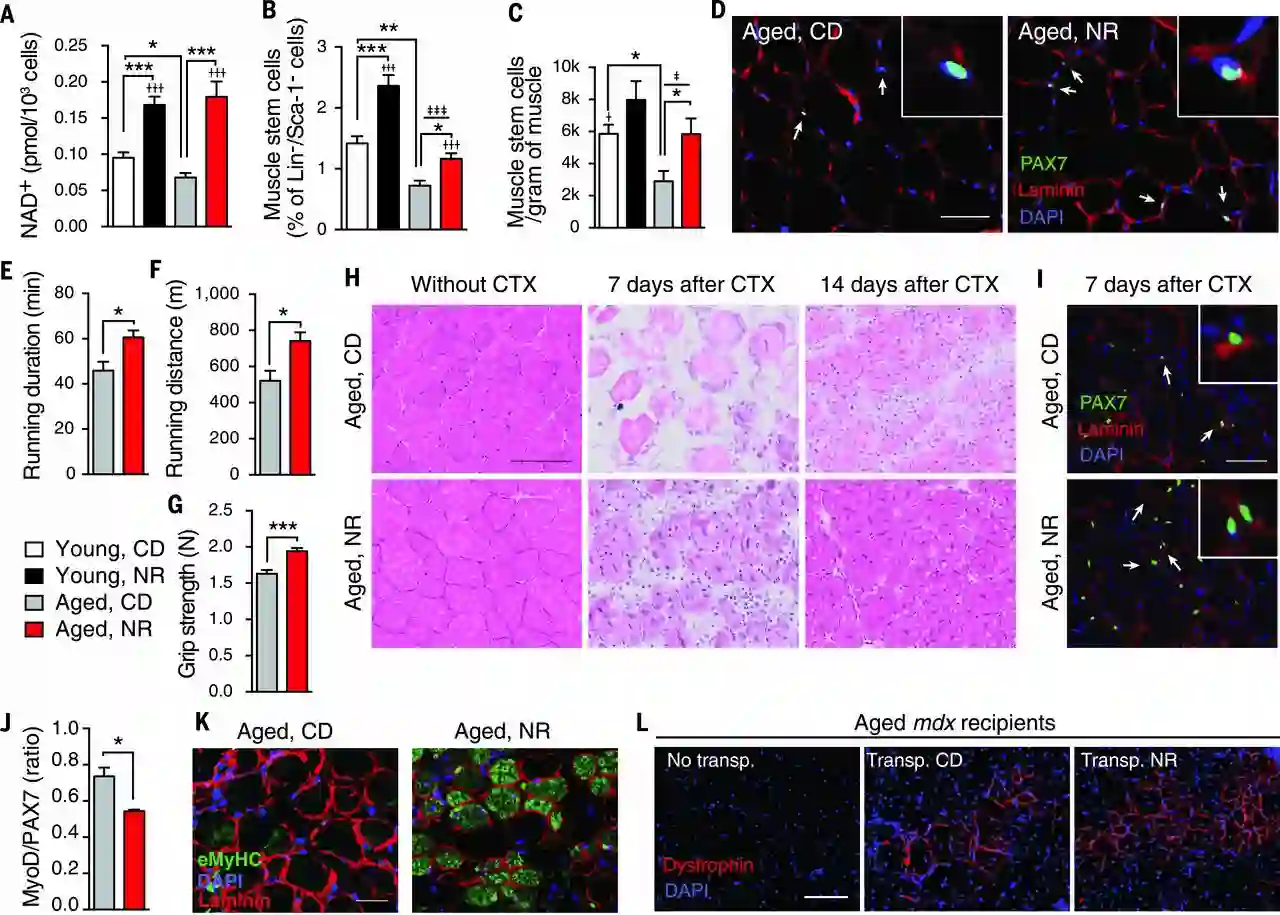
A 2016 study published in the journal Science found that supplementing with nicotinamide riboside (NR), a derivative of vitamin B3, can improve muscle function in aged mice and slightly extend their lifespan. This discovery offers new insights into anti-aging interventions.
Led by scientists from the Swiss Federal Institute of Technology in Lausanne, the research observed that as mice age, stem cells in their muscles—specialized cells responsible for muscle repair—lose vitality. This results in weakened muscle repair capacity and reduced strength. The primary cause is a decline in levels of the key energy molecule NAD+ (nicotinamide adenine dinucleotide), which impairs the function of cellular “energy factories” (mitochondria).
The scientists added NR to the diet of young and aged mice for 6 weeks. Results showed a significant increase in muscle stem cell numbers in aged mice, with faster muscle repair. In simulated injury experiments, NR-supplemented mice recovered more quickly, demonstrating improved muscle strength and endurance (such as running distance and grip strength). Additionally, transplanting these “rejuvenated” stem cells into mice with muscular dystrophy promoted muscle regeneration.
The study further revealed that NR restores NAD+ levels, activating cellular protective mechanisms to help mitochondria regain function and prevent premature stem cell aging. This benefit extended beyond muscles to neural stem cells in the brain and pigment stem cells in the skin. Mice starting NR supplementation at 24 months of age had their average lifespan extended from 829 days to 868 days—though modest, indicating potential anti-aging effects.
This research suggests that aspects of aging may not be entirely irreversible. Dietary supplementation could revitalize aging cells, providing new approaches to preventing age-related conditions like muscle atrophy. However, the findings are limited to mice, and human applications require further clinical trials. Currently, NR is available as a dietary supplement on the market.








Look Inside
Exploring Nicotinamide Adenine Dinucleotide Functions inCellular Aging Processes and Wellness Maintenance Strategies
Subscribe for Exclusive Updates and Offers on NAD
Experience Ultimate Energy Boost with NAD
Ready to Transform Your Vitality and Recovery?
Sign Up TodaySign Up TodayINNOVATION FORMULATED FOR YOUR CELLULAR VITALITY
Contact Us
† These statements have not been evaluated by the Food and Drug Administration. These products are not intended to diagnose, treat, cure or prevent any disease.
© 2026. NuSchild All Rights Reserved.